
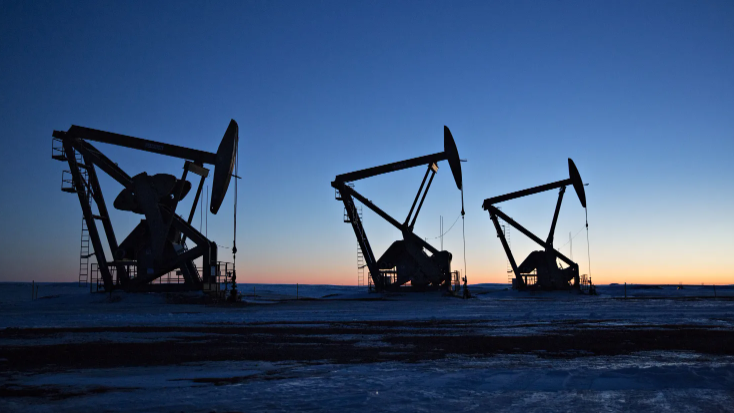
Oil markets climbed sharply this week, with crude prices rising more than 1% amid renewed geopolitical fears tied to U.S.–Iran tensions and signs that global demand remains resilient. Traders are balancing concerns over potential supply risks with evidence of stronger demand — a mix that has driven prices higher despite mixed data on inventories and economic indicators.
What Happened in the Oil Market Today?
On February 11, 2026, global oil benchmarks — including Brent crude and U.S. West Texas Intermediate (WTI) — moved higher, supported by risk sentiment due to U.S.–Iran tensions and draws in crude inventories that suggest improving demand fundamentals. Brent has recently traded above the $70 per barrel mark, while WTI strengthened toward the mid-$60s, levels not seen in recent weeks.
Analysts pointed out that the uptick was driven by geopolitical risk premiums rather than immediate supply disruptions — meaning traders are pricing in potential future risks, not actual losses of oil volumes.
Why U.S.–Iran Tensions Matter for Oil Prices
Iran is a major crude producer and a key player within OPEC+. It also borders the Strait of Hormuz, a vital chokepoint through which about one-fifth of the world’s oil transits. Any escalation in tensions between Washington and Tehran can amplify fears of supply disruptions, pushing prices upward.
Recent developments fueling unease include:
- Continued political friction over nuclear negotiations and sanctions
- Military posturing by the U.S. and its allies
- Warnings and advisories issued for shipping in critical waterways
These factors have kept oil markets on alert, even without actual cuts to production.
The U.S. has issued cautions to commercial vessels navigating near Iranian waters, renewing market concern that regional instability could spill over into physical supply routes — hence the added price support.
Demand Signals: A Surprising Support for Prices
In addition to geopolitical drivers, data from key oil stockpiles are showing signs of tighter balances in certain regions. Draws — or reductions — in inventories suggest that demand is picking up, especially as refineries increase throughput ahead of the Northern Hemisphere’s spring and summer seasons.
Meanwhile, global economic data — including employment gains and resilient consumer activity — point to continued energy consumption, supporting the narrative that demand is not faltering even with ongoing macro stressors.
Supply Factors: OPEC Output and Production Trends
On the supply side, OPEC and its partners have been managing production levels in response to global market conditions. Recent reports show modest declines in output from some member countries, which can tighten available supply and lend further support to prices.
At the same time, inventories in major crude hubs are not rising as quickly as expected, which limits downward pressure on prices. This balance between inventory builds and drawdowns is contributing to upward price momentum.
Global Demand Outlook: Mixed Signals but Resilient
Oil demand forecasts remain somewhat mixed, with some agencies projecting slower growth while others see continued consumption increases, particularly in key developing markets. For now, the market’s reaction suggests traders expect demand to remain sufficiently robust to absorb potential supply disruptions and higher prices.
Geopolitical Risk Premiums Still Dominating
Perhaps the single biggest influence on oil today is the risk premium — the extra price built into crude due to fears of future supply constraints stemming from geopolitical tensions. Even if no physical disruptions occur, oil markets typically respond strongly to:
- Diplomatic stalemates
- Threats of military escalation
- Shipping advisories near strategic waterways
These factors have a disproportionate impact because the global oil system depends on high volumes of product moving through narrow channels such as the Strait of Hormuz.
What This Means for Consumers, Businesses, and Markets
The upward drift in oil prices has several ripple effects:
- Higher fuel costs for consumers and industries
- Increased input costs for transportation and manufacturing
- Pressure on inflation in countries reliant on imported energy
- Stock market sensitivity in energy-related sectors
Investors often view oil price spikes as a barometer of broader global risk sentiment — meaning oil is not just a commodity but a tune-sensitive indicator of geopolitical and economic stability.
Possible Scenarios Moving Forward
Looking ahead, oil prices could follow several possible paths:
- Continued geopolitical support — If tensions escalate, prices may climb further as premiums widen.
- Stabilizing diplomatic progress — Successful talks or de-escalation would reduce the risk premium and could calm prices.
- Supply-demand shifts — Stronger demand growth or OPEC policy changes could sustain or accelerate the recent rally.
- Inventory rebounds — If inventories increase sharply, it could cap or reverse gains despite geopolitical unease.
Markets will be watching political developments closely, especially diplomatic interactions between the U.S. and Iran, as well as OPEC+ decisions in upcoming meetings.
Conclusion: A Market Balancing Risk and Demand
The recent rise in oil prices — more than 1% and at times closer to 2% or higher — reflects a complex interplay between geopolitical tension and improved demand dynamics. While no immediate supply disruption has occurred, the prospect of heightened U.S.–Iran conflict and signs of stronger energy consumption have supported crude prices.
Oil markets are increasingly sensitive to geopolitical developments in the Middle East, global economic data, and inventory trends, making any new headline a potential market mover. For global consumers, producers, and investors, understanding this shifting landscape will remain critical as 2026 progresses.