
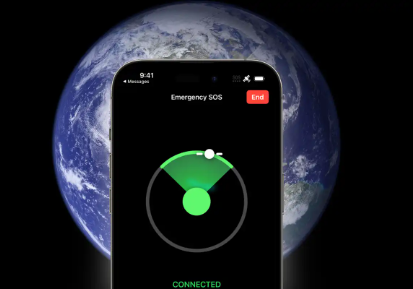
Apple has never been shy about pushing boundaries, and if recent reports are accurate, the upcoming iPhone 18 Pro models may take connectivity to an entirely new level. Rumors suggest that Apple is exploring 5G satellite connectivity for its future Pro lineup—a move that could dramatically change how smartphones stay connected in remote and emergency situations.
We’ve already seen Apple introduce satellite-based emergency SOS features in earlier iPhone models. But 5G satellite connectivity? That’s a much bigger leap. It hints at a future where your phone doesn’t rely solely on traditional cell towers. Instead, it could connect directly to satellites orbiting above Earth.
Let’s break down what this means, how it works, and why it could be a game-changer.
What Is 5G Satellite Connectivity?
To understand the significance, we need to unpack the concept.
Traditional smartphones connect to cellular towers. If you’re too far from a tower—think remote mountains, open oceans, deserts—you lose signal. That’s where satellite communication comes in.
Satellite connectivity allows a device to communicate directly with satellites in low Earth orbit (LEO). These satellites then relay signals to ground stations and onward to the broader network.
Now combine that with 5G technology, and you get potentially faster, more efficient satellite-based communication—not just basic emergency texting, but possibly expanded data capabilities.
How Apple Has Used Satellite Technology So Far
Apple introduced satellite connectivity with its Emergency SOS feature in recent iPhone generations. However, that system is limited:
- Text-based emergency communication
- Location sharing
- No voice or full internet access
- Requires clear sky visibility
The rumored iPhone 18 Pro satellite 5G support would go beyond basic emergency messaging. It could represent a shift toward more integrated satellite networking, potentially allowing:
- Broader text capabilities
- Data transfer
- Improved emergency services
- Enhanced global coverage
This would move satellite from “backup feature” to “connectivity enhancement.”
Why 5G Satellite Support Matters
Let’s be real—most people live in cities with solid network coverage. So why does this matter?
Because coverage gaps still exist. And they’re bigger than you think.
1. Rural and Remote Connectivity
Millions of people globally live in areas with weak or no cellular coverage. Satellite-backed 5G could provide connectivity where towers are impractical.
2. Emergency Situations
Natural disasters often knock out cell towers. Satellite connectivity keeps communication alive when infrastructure fails.
3. Travel and Adventure
Hikers, sailors, campers, and travelers could benefit from reliable off-grid communication without carrying separate satellite phones.
4. Military and Government Applications
Secure satellite-enabled smartphones may offer strategic advantages for field operations.
How 5G Satellite Could Work on the iPhone 18 Pro
While Apple hasn’t officially confirmed details, industry analysts speculate that the iPhone 18 Pro models could:
- Use upgraded modem chips with satellite support
- Partner with satellite providers such as Globalstar or similar networks
- Integrate advanced antenna systems within the device
- Optimize power management to handle satellite signals efficiently
Satellite communication requires stronger signal processing than standard cellular networking. That means improved chipsets, battery optimization, and antenna engineering will be critical.
Apple’s in-house chip development gives it a major advantage here.
Challenges Apple Must Overcome
Adding 5G satellite connectivity isn’t simple. There are several hurdles:
1. Power Consumption
Satellite signals require more energy. Apple will need to ensure battery life isn’t significantly impacted.
2. Speed Limitations
Satellite bandwidth is currently limited compared to traditional 5G towers. While improving, it’s not yet equivalent to urban 5G speeds.
3. Hardware Constraints
Fitting satellite-capable antennas into a slim smartphone design is a technical challenge.
4. Regulatory Approvals
Satellite communication operates across international airspace and frequencies. Global regulatory compliance will be complex.
Could This Replace Traditional Cellular Networks?
Not anytime soon.
Satellite 5G in smartphones is more likely to complement cellular networks rather than replace them. Urban areas will continue relying on dense 5G infrastructure for high-speed data.
Satellite connectivity acts as a safety net—bridging coverage gaps rather than overtaking traditional towers.
Think of it as hybrid connectivity:
- Cellular when available
- Satellite when needed
That seamless transition could be the real innovation.
The Competitive Landscape
Apple isn’t alone in exploring satellite connectivity. Several companies are working on direct-to-device satellite communication, including:
- SpaceX’s Starlink mobile initiatives
- Qualcomm’s satellite-capable Snapdragon chips
- Various telecom-satellite partnerships
If Apple integrates full 5G satellite capability into the iPhone 18 Pro, it could accelerate industry adoption and set a new premium smartphone standard.
Historically, when Apple commits to a feature, competitors follow.
Impact on Consumers
For the average user, satellite 5G may initially feel like an invisible feature—something you don’t notice until you need it.
But its long-term impact could include:
- Greater peace of mind
- Reduced reliance on network availability
- Expanded travel flexibility
- Increased device value
If Apple positions this feature as exclusive to Pro models, it may also reinforce the premium tier’s differentiation.
Will It Be Free?
That’s the big question.
Current satellite emergency services on iPhones have been offered free for a limited period after purchase. But expanded satellite 5G access could require:
- Subscription plans
- Carrier partnerships
- Pay-per-use options
Much will depend on Apple’s agreements with satellite providers and global telecom operators.
Broader Industry Implications
If Apple successfully integrates 5G satellite into the iPhone 18 Pro, it signals a broader transformation in mobile connectivity.
We may see:
- Increased investment in LEO satellite networks
- Expansion of hybrid telecom models
- Greater innovation in mobile chip design
- New global connectivity standards
The smartphone may evolve from being tower-dependent to being truly globally connected.
That’s a big shift.
When Could We See It?
The iPhone 18 lineup is expected in the coming years, and rumors suggest satellite enhancements are under development. However, final implementation depends on:
- Hardware readiness
- Satellite network capacity
- Regulatory approvals
- Market demand
Apple typically introduces major connectivity upgrades strategically, aligning them with broader ecosystem improvements.
Conclusion
The possibility that Apple’s iPhone 18 Pro models may support 5G satellite connectivity is more than just another incremental upgrade. It represents a potential leap toward universal mobile access.
While it won’t replace traditional 5G networks, satellite-backed connectivity could redefine reliability, safety, and global coverage. From remote hikers to disaster zones, the implications are meaningful.
If Apple delivers on this vision, the iPhone 18 Pro could become not just a smartphone—but a truly global communication device.
And in a world that increasingly depends on constant connectivity, that’s a powerful evolution.