
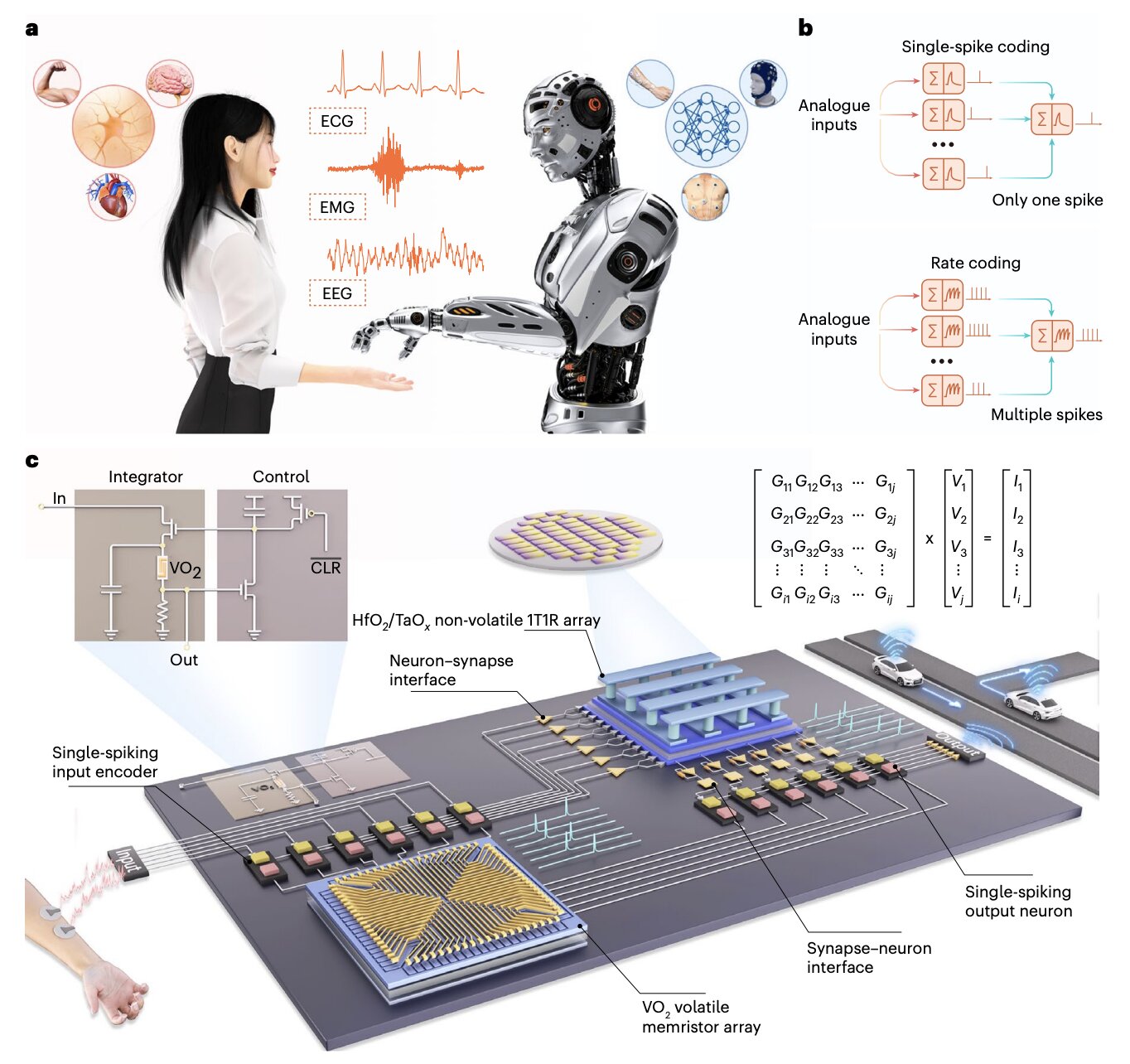
In a development that sounds like it belongs in science fiction—but is firmly rooted in modern neuroscience—researchers have unveiled a groundbreaking system that combines artificial intelligence with advanced brain-control technology to identify animal behavior and silence the neurons responsible for it in real time.
This innovation represents a powerful leap forward in understanding how the brain generates behavior. By using AI to detect specific actions as they occur and then instantly intervening at the neural level, scientists are moving closer to decoding the intricate relationship between brain activity and observable behavior.
The implications are profound, spanning neuroscience research, mental health treatment, neurological disorders, and even ethical discussions about the future of brain–machine interaction.
The Intersection of AI and Neuroscience
Artificial intelligence has already transformed industries from finance to medicine. In neuroscience, AI has become an indispensable tool for analyzing vast datasets generated by brain imaging, neural recordings, and behavioral experiments.
The brain produces enormous amounts of data. Even small groups of neurons can generate complex electrical patterns, and linking those patterns to specific behaviors is extraordinarily challenging. Traditional methods required researchers to observe behavior, analyze neural recordings afterward, and make correlations.
The new system changes that model entirely.
Instead of analyzing data retrospectively, AI now identifies behavior as it happens. Once a target behavior is detected—such as a specific movement, response, or reaction—the system can immediately trigger a neural intervention, silencing or modifying the activity of neurons involved in generating that behavior.
This closed-loop approach marks a shift from observation to real-time interaction.
How the System Works
At the core of this technology are three integrated components:
- High-Speed Behavioral Tracking
- Artificial Intelligence Pattern Recognition
- Targeted Neural Intervention (often via optogenetics or similar methods)
Behavioral Tracking
High-resolution cameras and sensors monitor the animal’s movements with extreme precision. Subtle changes in posture, speed, and positioning are captured and translated into digital data.
AI Pattern Recognition
Machine learning models are trained to recognize specific behaviors. These models can distinguish between similar movements and predict patterns based on neural and physical cues.
For example, the AI may be trained to detect:
- Grooming behavior
- Aggression
- Feeding actions
- Fear responses
- Repetitive or compulsive movements
The system learns from labeled datasets and improves accuracy over time.
Neural Silencing in Real Time
Once the AI identifies a behavior, it sends a signal to a neural intervention system. In many studies, this involves optogenetics—a method that uses light to activate or inhibit genetically modified neurons.
When triggered, the system can:
- Silence specific neurons
- Interrupt neural circuits
- Modify activity patterns
All within milliseconds.
This timing is critical. By intervening during the behavior rather than before or after, researchers can determine causation rather than mere correlation.
Why Real-Time Intervention Matters
Understanding which neurons are active during a behavior is only part of the story. The deeper question is whether those neurons cause the behavior or simply respond to it.
Real-time silencing allows researchers to test this directly.
If turning off a specific neural population immediately stops or alters a behavior, it provides strong evidence that those neurons play a causal role.
This method is far more precise than traditional approaches, which often relied on broader brain region stimulation or lesion studies.
Applications in Neuroscience Research
The potential research applications are extensive.
1. Understanding Mental Health Disorders
Many psychiatric conditions, including anxiety, depression, and obsessive-compulsive disorder, involve disrupted neural circuits.
By identifying and interrupting neural activity tied to maladaptive behaviors in animal models, scientists can better understand how these circuits function—and malfunction.
2. Addiction Studies
Addictive behaviors are driven by specific neural pathways related to reward and reinforcement. Real-time intervention could help pinpoint the circuits that sustain addictive actions.
3. Movement Disorders
Conditions like Parkinson’s disease involve abnormal neural activity that affects motor control. Closed-loop systems may provide insight into more precise intervention strategies.
4. Fear and Trauma Research
Understanding how fear responses are generated and sustained could lead to improved treatments for post-traumatic stress disorder (PTSD).
The Role of Artificial Intelligence
AI is the enabling force behind this innovation. Without machine learning, identifying complex behaviors instantly would be nearly impossible.
Traditional rule-based systems struggle to interpret subtle behavioral differences. AI models, especially deep learning networks, can analyze thousands of data points simultaneously, recognizing patterns invisible to the human eye.
Moreover, AI allows the system to adapt. As new behaviors are introduced or environmental conditions change, the model can update its understanding.
This adaptability makes the technology scalable and increasingly accurate.
Ethical Considerations
With every leap forward in brain-control technology comes a wave of ethical questions.
Although current research focuses on animals in controlled laboratory settings, the broader implications raise concerns.
Key ethical considerations include:
- The welfare of animals used in research
- The potential for misuse in human applications
- Questions of autonomy and consent
- Privacy concerns in future brain–machine systems
While the system is currently a research tool, its evolution could influence human neurotechnology. Clear ethical frameworks and regulatory oversight will be essential as the field advances.
Potential Human Applications
Though still in early stages, similar closed-loop systems could one day assist in treating neurological and psychiatric disorders in humans.
Deep brain stimulation (DBS) already uses implanted devices to regulate abnormal brain activity in conditions like Parkinson’s disease. However, current systems often operate continuously or on preset parameters.
AI-driven real-time systems could improve this by:
- Detecting abnormal neural patterns instantly
- Delivering targeted intervention only when needed
- Reducing side effects
- Improving treatment precision
This approach is sometimes referred to as adaptive or responsive neurostimulation.
Challenges Ahead
Despite its promise, the system faces several technical and scientific challenges.
Precision Targeting
Silencing the wrong neurons could disrupt healthy brain function. High specificity is critical.
Data Complexity
The brain is not static. Neural circuits shift based on context, learning, and environment.
Scalability
What works in small animal models may be far more complex in larger brains, including humans.
Long-Term Effects
Repeated neural intervention may have unintended consequences. Researchers must carefully monitor long-term impacts.
A Shift Toward Closed-Loop Neuroscience
This innovation reflects a broader movement toward closed-loop neuroscience systems—technologies that both monitor and intervene dynamically.
Rather than studying the brain passively, scientists are increasingly engaging with it interactively.
This paradigm shift mirrors trends in other fields, where real-time data processing enables rapid decision-making and adaptive control.
In neuroscience, the stakes are higher—but so is the potential.
Broader Implications for Brain–Machine Interfaces
Brain–machine interfaces (BMIs) already allow individuals with paralysis to control robotic limbs or computer cursors through neural signals.
Integrating AI-driven behavioral detection with neural control could lead to more intuitive interfaces.
For example:
- Devices that respond to intention before physical movement occurs
- Systems that suppress tremors automatically
- Tools that assist cognitive focus
While still speculative, these possibilities highlight how foundational research in animals can inform future technological breakthroughs.
Conclusion
The development of a system that uses artificial intelligence to identify animal behavior and silence responsible neurons in real time represents a remarkable convergence of technology and biology.
By closing the loop between observation and intervention, researchers are gaining unprecedented insight into how specific neural circuits generate behavior. The ability to intervene instantly offers not only scientific clarity but also potential therapeutic pathways for neurological and psychiatric disorders.
At the same time, the technology prompts important ethical conversations about the future of brain control and AI integration.
As science continues to explore the boundaries of neural understanding, one thing is clear: the partnership between artificial intelligence and neuroscience is just beginning. And its impact could reshape how we understand—and ultimately influence—the brain itself.