
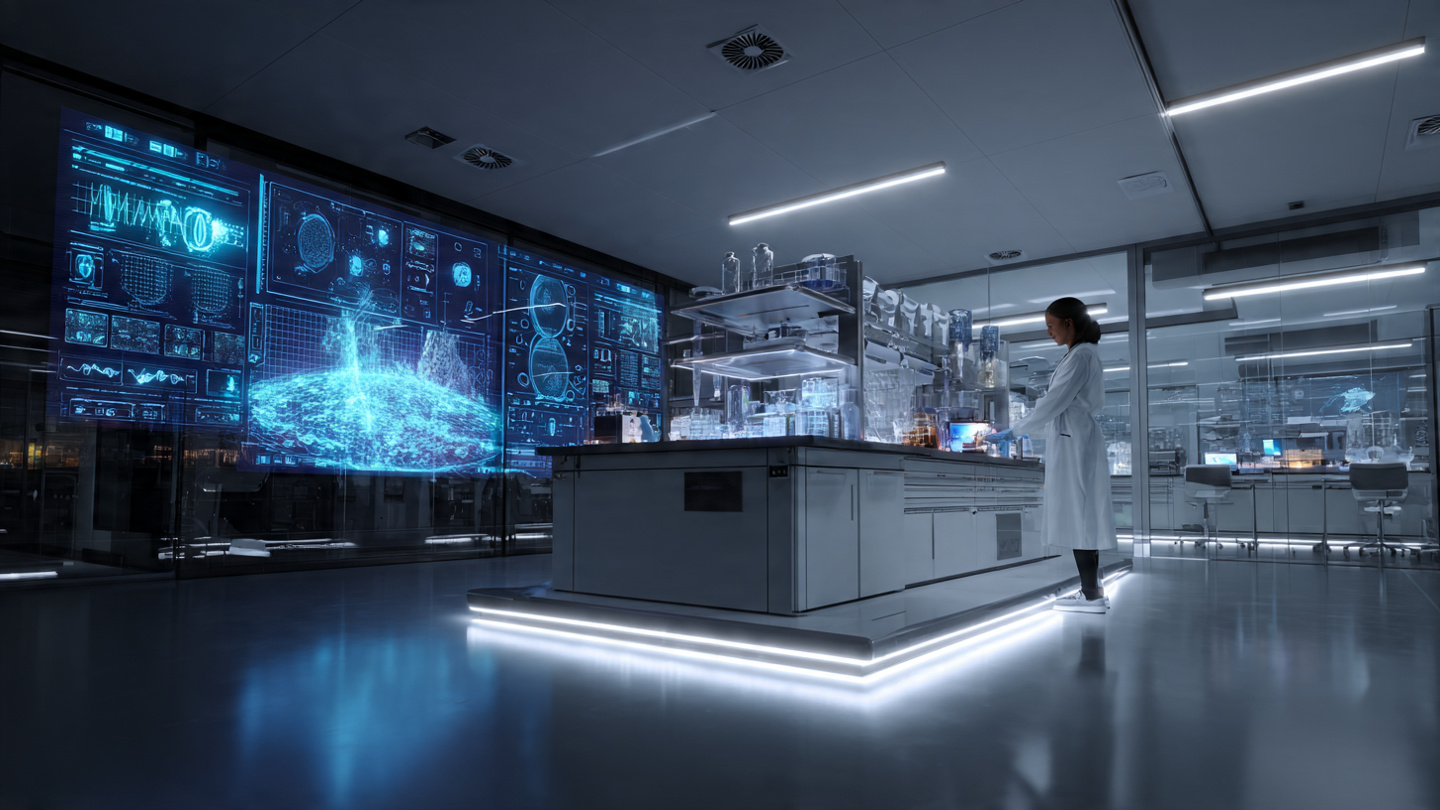
In a groundbreaking move that signals the growing intersection of healthcare and artificial intelligence, an AI-powered medical laboratory has secured a $1 billion investment from NVIDIA, the global technology giant known for its leadership in graphics processing units (GPUs) and AI computing. This unprecedented investment is expected to accelerate the development of cutting-edge medical diagnostics, predictive healthcare analytics, and AI-driven research tools, marking a major milestone in the modernization of healthcare.
The announcement has drawn attention from investors, healthcare professionals, and tech enthusiasts alike, highlighting the transformative potential of AI in medical science.
The AI Medical Lab: A New Era in Healthcare
The AI-powered medical lab is a next-generation research and diagnostic facility that leverages artificial intelligence to enhance medical testing, streamline laboratory operations, and provide more accurate and faster results. By integrating machine learning algorithms and large-scale data analysis, the lab is capable of identifying patterns and insights from vast datasets that would be impossible for humans to analyze manually.
Its focus areas include:
- Predictive diagnostics: Using AI to detect early signs of diseases like cancer, diabetes, and cardiovascular conditions.
- Genomic research: Analyzing genetic data to identify personalized treatment options.
- Drug discovery: Accelerating the development of new medications by predicting molecular interactions and treatment efficacy.
- Operational efficiency: Automating repetitive laboratory processes, reducing human error, and speeding up testing timelines.
The lab’s approach demonstrates how artificial intelligence is revolutionizing both patient care and medical research, positioning it as a leader in the rapidly growing field of AI healthcare.
NVIDIA’s Strategic Investment
NVIDIA’s $1 billion investment represents one of the largest private technology infusions into a healthcare startup in recent years. The company’s expertise in AI hardware, GPUs, and machine learning frameworks is expected to significantly enhance the lab’s computational capabilities, allowing it to process vast amounts of medical data more efficiently than ever before.
Key benefits of the investment include:
- Access to NVIDIA’s AI infrastructure: Advanced GPUs and AI tools for data modeling, deep learning, and predictive analytics.
- Collaboration on AI healthcare projects: Joint initiatives to develop AI models for disease detection, medical imaging, and personalized treatment strategies.
- Global scaling: Resources to expand the lab’s reach internationally, facilitating collaboration with hospitals, research institutions, and healthcare providers.
NVIDIA’s involvement underscores the increasing importance of technology partnerships in healthcare innovation, bridging the gap between computational power and medical expertise.
Why AI in Healthcare is Critical Now
The timing of this investment is no coincidence. Healthcare systems worldwide face challenges such as rising patient demand, complex disease patterns, and increasing pressure for cost-effective solutions. AI offers the potential to:
- Improve diagnostic accuracy: AI algorithms can detect subtle anomalies in medical scans and lab results that may be missed by human eyes.
- Predict disease progression: Machine learning models can forecast patient outcomes, enabling proactive interventions.
- Optimize resource allocation: Hospitals and labs can use AI to streamline workflows, reduce waste, and improve patient throughput.
- Accelerate medical research: AI reduces the time required to analyze complex datasets, speeding up drug discovery and clinical trials.
The investment by NVIDIA is a clear vote of confidence that AI will become an integral part of modern healthcare systems.
The Impact on Patients and Healthcare Providers
For patients, AI-powered labs promise faster test results, more precise diagnostics, and personalized treatment recommendations. Imagine receiving test results within hours instead of days, or having treatment options tailored to your genetic makeup and lifestyle.
Healthcare providers, meanwhile, benefit from automated workflows, decision support systems, and predictive analytics, enabling doctors and lab technicians to focus on complex cases while AI handles routine data analysis. The combination of speed, accuracy, and efficiency has the potential to reduce medical errors and improve patient outcomes significantly.
The Role of NVIDIA in Driving Innovation
NVIDIA has been a pioneer in AI computing, providing the hardware and software frameworks that power many of today’s most advanced machine learning applications. By partnering with the AI medical lab, NVIDIA brings:
- High-performance computing: GPUs capable of processing massive medical datasets in real-time.
- Deep learning frameworks: Tools like NVIDIA Clara for healthcare-specific AI development.
- AI optimization: Technologies that accelerate model training and improve predictive accuracy.
This collaboration exemplifies how tech giants can play a crucial role in transforming healthcare, providing the computational backbone for innovations that were previously unimaginable.
Global Implications for Medical Research
The $1 billion investment also has broader implications for global medical research. With increased computational resources, the AI lab can:
- Collaborate with international hospitals and universities
- Share predictive models and research findings across borders
- Develop AI tools adaptable to different populations and healthcare systems
- Contribute to global disease surveillance and pandemic preparedness
By scaling AI capabilities worldwide, the lab and NVIDIA could accelerate medical breakthroughs and improve healthcare equity across diverse regions.
Potential Challenges Ahead
Despite the optimism, implementing AI in healthcare is not without challenges:
- Data privacy and security: Sensitive patient data must be protected from cyber threats and misuse.
- Regulatory compliance: AI tools must meet stringent healthcare regulations before clinical deployment.
- Integration with existing systems: Hospitals and labs may face technical hurdles integrating AI solutions with legacy infrastructure.
- Bias in AI models: Ensuring AI algorithms are fair, unbiased, and accurate across diverse populations is critical.
Addressing these challenges will require careful planning, transparency, and ongoing collaboration between technology providers, medical professionals, and regulators.
Future Outlook
The partnership between the AI medical lab and NVIDIA signals a new era of healthcare innovation, where artificial intelligence is no longer experimental but central to medical practice. Expected developments in the coming years include:
- Expansion of AI diagnostics to multiple medical specialties
- Broader use of predictive analytics for personalized patient care
- Accelerated drug discovery pipelines
- Enhanced collaboration between tech companies and healthcare institutions
Ultimately, this investment represents a step forward in creating smarter, faster, and more effective healthcare systems globally.
Conclusion
The $1 billion investment from NVIDIA in the AI-powered medical lab marks a historic moment for both healthcare and technology sectors. By combining cutting-edge AI capabilities with medical expertise, the lab is poised to transform diagnostics, research, and patient care.
As AI becomes increasingly embedded in healthcare, patients can expect faster, more accurate results, while healthcare providers gain powerful tools to deliver better outcomes. This collaboration exemplifies the future of medicine: intelligent, data-driven, and patient-focused.