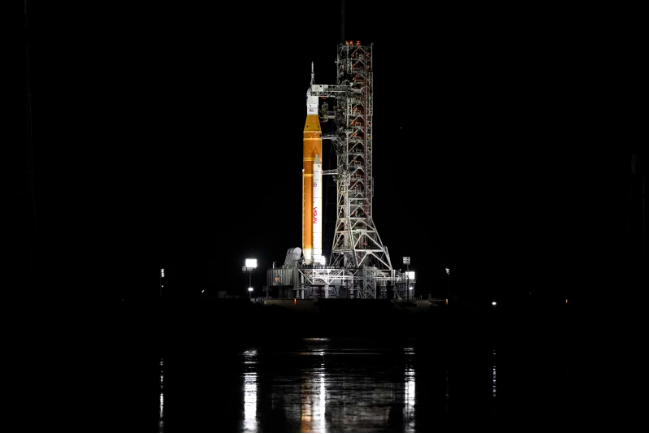
NASA is once again capturing the world’s imagination as it prepares for Artemis II, the first crewed mission of the Artemis program and a critical step toward returning humans to the Moon. After decades since the Apollo era, Artemis II represents more than just another space mission—it is a bold declaration that deep-space human exploration is back, more ambitious, and more inclusive than ever.
As preparations intensify, Artemis II is shaping up to be a defining moment in modern space history. From cutting-edge spacecraft technology to a diverse crew of astronauts, the mission symbolizes humanity’s renewed push beyond Earth’s orbit.
What Is the Artemis Program?
The Artemis program is NASA’s long-term initiative to return humans to the Moon and establish a sustainable presence there. Named after Artemis, the twin sister of Apollo in Greek mythology, the program aims to build on past achievements while laying the groundwork for future missions to Mars.
Key goals of the Artemis program include:
- Landing the first woman and the next man on the Moon
- Establishing long-term lunar exploration capabilities
- Testing technologies required for deep-space missions
- Strengthening international and commercial partnerships
Artemis II plays a crucial role in turning these goals into reality.
Understanding the Artemis II Mission
Unlike Artemis I, which was an uncrewed test flight, Artemis II will carry astronauts aboard the Orion spacecraft for the first time. The mission is designed to test all critical systems with humans onboard before attempting a lunar landing.
Artemis II is expected to:
- Send a crewed Orion spacecraft around the Moon
- Perform a lunar flyby without landing
- Validate life support, navigation, and communication systems
- Demonstrate safe re-entry and splashdown procedures
This mission is a dress rehearsal for future Moon landings.
The Orion Spacecraft: NASA’s Deep-Space Capsule
At the heart of Artemis II is the Orion spacecraft, a next-generation crew capsule built for deep-space exploration. Unlike the spacecraft used in low Earth orbit missions, Orion is designed to withstand the harsh conditions of space beyond Earth’s protective magnetic field.
Key features of Orion include:
- Advanced life-support systems
- Radiation shielding for astronaut safety
- High-speed re-entry capability
- Enhanced navigation and communication systems
Artemis II will be the first true test of Orion’s performance with a human crew onboard.
The Space Launch System (SLS): Powering the Mission
Launching Artemis II is NASA’s Space Launch System (SLS), the most powerful rocket ever built. SLS provides the thrust needed to send Orion and its crew beyond Earth’s orbit toward the Moon.
The SLS rocket represents:
- Years of engineering development
- Unmatched payload capacity
- The foundation for future deep-space missions
Its successful performance is essential for the long-term success of the Artemis program.
The Artemis II Crew: Humanity’s Representatives
One of the most exciting aspects of Artemis II is its crew. NASA has assembled a team of highly trained astronauts who bring diverse backgrounds and experience to the mission.
The Artemis II crew includes:
- Veteran astronauts with spaceflight experience
- First-time lunar mission participants
- International collaboration through partner space agencies
Their mission will test not only spacecraft systems but also human endurance, teamwork, and adaptability in deep space.
Mission Objectives and Key Tests
Artemis II is packed with critical objectives that will shape future missions. These include:
- Life Support Testing: Ensuring astronauts can live and work safely in deep space
- Navigation Validation: Proving accurate guidance around the Moon
- Emergency Procedures: Practicing abort scenarios and contingency responses
- Communication Systems: Maintaining contact over vast distances
Each objective provides data essential for future lunar landings.
Why Artemis II Matters So Much
Artemis II is more than a technical mission—it’s a confidence builder. Before NASA commits astronauts to landing on the Moon, it must prove that every system works flawlessly with humans onboard.
This mission also:
- Restores human capability to travel beyond low Earth orbit
- Demonstrates leadership in space exploration
- Inspires the next generation of scientists and engineers
In many ways, Artemis II bridges the gap between past achievements and future ambitions.
International and Commercial Partnerships
NASA is not going to the Moon alone. The Artemis program involves partnerships with international space agencies and private companies. These collaborations help share costs, expertise, and innovation.
Key partnerships include:
- International space agencies contributing technology and astronauts
- Commercial companies developing landers, habitats, and logistics systems
- Shared scientific goals that benefit humanity as a whole
Artemis II showcases how global cooperation is shaping the future of space exploration.
Preparing for Artemis III and Beyond
The success of Artemis II will pave the way for Artemis III, the mission that aims to land astronauts on the lunar surface. Lessons learned from Artemis II will directly influence mission planning, hardware upgrades, and crew training.
Beyond the Moon, Artemis serves as a stepping stone toward:
- Long-duration lunar habitats
- Mars missions in the coming decades
- A permanent human presence beyond Earth
Artemis II is the foundation upon which these dreams are built.
Challenges and Risks Ahead
Space exploration is never without risk. Artemis II faces challenges such as:
- Technical complexities of new systems
- Human health risks in deep space
- Tight timelines and high expectations
NASA’s rigorous testing and safety culture aim to minimize these risks, but the mission remains one of the most complex endeavors ever attempted.
Public Interest and Global Inspiration
As NASA prepares for Artemis II, public interest is growing rapidly. The mission represents hope, progress, and humanity’s natural desire to explore the unknown.
For students, scientists, and dreamers around the world, Artemis II sends a powerful message: exploration is still a defining part of who we are.
Conclusion
As NASA prepares for the Artemis II moon mission, the world stands on the edge of a new chapter in space exploration. This mission is not just about orbiting the Moon—it’s about proving that humans are ready to venture farther than ever before. With advanced technology, a skilled crew, and a clear vision for the future, Artemis II symbolizes humanity’s return to deep space and its determination to explore, discover, and inspire.
The journey back to the Moon is underway, and Artemis II is leading the way.
Leave a Reply