
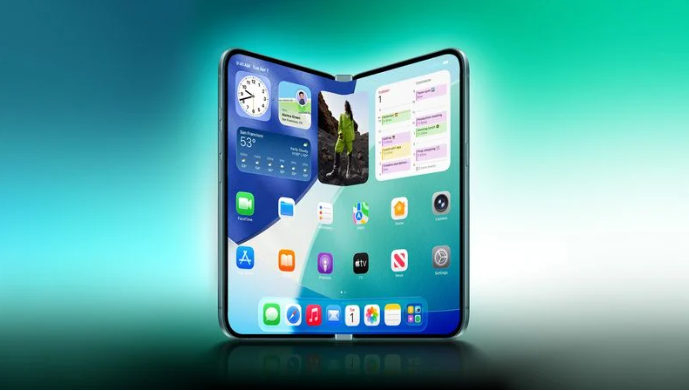
For years, Apple watched from the sidelines as Samsung, Google, and Huawei iterated through multiple generations of foldable smartphones. But the silence is finally breaking. The rumor mill has shifted from “if” Apple will make a foldable to “when”—and more importantly, “what form” it will take. In the last 90 days, supply chain reports, analyst notes, and newly granted patents have dramatically reshaped our expectations for the foldable iPhone 2026 (or 2027). Here is everything that has changed and the concrete facts we know right now.
What’s Changed: The Major 2024-2025 Rumor Shifts
Until recently, most leakers agreed Apple would launch a foldable iPad first. That narrative has flipped completely. New evidence suggests the foldable iPhone is now the priority, but with a radical design departure from the Samsung Galaxy Z Fold series.
From “Clamshell” to “Book-Style” (and Back Again)
Early rumors heavily favored a clamshell foldable iPhone (similar to the Galaxy Z Flip), marketed as a compact, premium fashion device. However, updated supply chain data from DigiTimes and analyst Ming-Chi Kuo now points to a 7.5- to 8-inch book-style foldable when unfolded—positioned as a hybrid iPhone/iPad.
Key change: Apple reportedly shelved the clamshell prototype due to battery life concerns and a lack of distinct usability advantages over the standard iPhone Pro.
The Crease: Apple’s Obsession Pays Off
The single biggest complaint about existing foldables is the visible crease. According to a late-2024 patent (US 2024/0379567 A1), Apple has invented a “self-healing” display layer and a novel hinge mechanism using interlocking teeth that virtually eliminate the crease. Multiple Korean display makers (Samsung Display and LG) are now bidding to supply a crease-free OLED panel exclusively for Apple.
What We Know Now: Concrete Details Backed by Evidence
While Apple never comments on future products, triangulating between supply chain leaks, patent filings, and software code references gives us a reliable picture.
Display and Size Specifications
-
Outer display: 5.5 inches (thicker bezels, similar to iPhone mini)
-
Inner main display: 7.8 inches, 4:3 aspect ratio (identical to iPad mini)
-
Refresh rate: 120Hz ProMotion on both screens
-
Cover material: Hybrid glass-plastic ultra-thin glass (UTG) coated with a scratch-resistant polymer
Processor and Camera Hardware
-
Chip: M5-series chip (not A20). This shift suggests Apple is merging iPad-level multitasking into the foldable iPhone.
-
Cameras: Dual rear lenses (48MP main + 12MP ultra-wide) with a new under-display front camera for the inner screen—a first for any iPhone.
-
Battery: Two stacked battery cells (total capacity ~5,000 mAh) with 40W wired charging (up from 27W).
Software: The Secret Weapon – “FoldableOS”
Code references in iOS 18.1 beta and visionOS reveal a new internal framework called “FoldableKit”. This allows apps to seamlessly transition from the outer screen to the inner screen. Key features include:
-
Drag-and-drop between split apps on the inner display.
-
“Stage View” – a persistent dock that turns the foldable into a mini desktop when connected to an external monitor.
-
Apple Pencil support (likely a new, shorter Pencil 3).
When Will the Foldable iPhone Launch? (Timeline Update)
This is where the rumor landscape has changed most dramatically.
| Source | Previous Prediction | Updated Prediction |
|---|---|---|
| Ming-Chi Kuo | 2025 | Late 2026 |
| Ross Young (DSCC) | 2026 | Q1 2027 |
| The Elec (Korean supply chain) | N/A | Mass production starts Dec 2026 |
The bottom line: Do not expect a foldable iPhone in 2025. The most realistic launch window is September 2026 (announcement) with availability in early 2027. Apple is reportedly waiting for display yields to exceed 80% and for the crease-free tech to be production-ready.
Potential Price and Models
All signs point to a ultra-premium flagship – not a mass-market device.
-
Expected starting price: $2,199 – $2,499 (higher than the $1,799 Vision Pro entry point)
-
Models: One model only (unlike the standard iPhone lineup). Storage options: 256GB, 512GB, 1TB.
-
Colors: Space Black, Titanium Silver, and a new Deep Bronze.
Should You Wait for the Foldable iPhone? (Actionable Advice)
If you are in the market for a new iPhone today, here is how to decide.
Wait if:
-
You currently use an iPhone 12 or older and can stretch your device for another 18–24 months.
-
You value multi-tasking (e.g., running Excel + Teams side-by-side on a single screen).
-
You are a developer or content creator who wants early access to a new form factor.
Buy now (iPhone 15 Pro / 16 Pro) if:
-
You need a durable, waterproof device immediately. First-gen foldables are inherently less rugged.
-
You are on a budget under $1,500.
-
You prefer one-handed usability – a 7.8-inch unfolded device will be heavy and wide.
Conclusion: The Foldable iPhone Is Real – But Different Than Expected
The latest rumors confirm that Apple is not copying existing foldables. Instead, they are building a crease-free, iPad-iPhone hybrid powered by an M-series chip and a new multitasking OS. While the 2026 launch date feels far away, the delays are intentional: Apple refuses to ship a product with a visible crease or poor battery life.
For now, watch for two key milestones:
-
WWDC 2025 – Look for “FoldableKit” APIs in the iOS 19 beta.
-
Fall 2025 – A possible “foldable hinge supplier” announcement from Foxconn.
The foldable iPhone won’t be for everyone. But for power users who have been waiting for Apple to perfect the form factor, 2027 might finally be the year your phone becomes your tablet.