
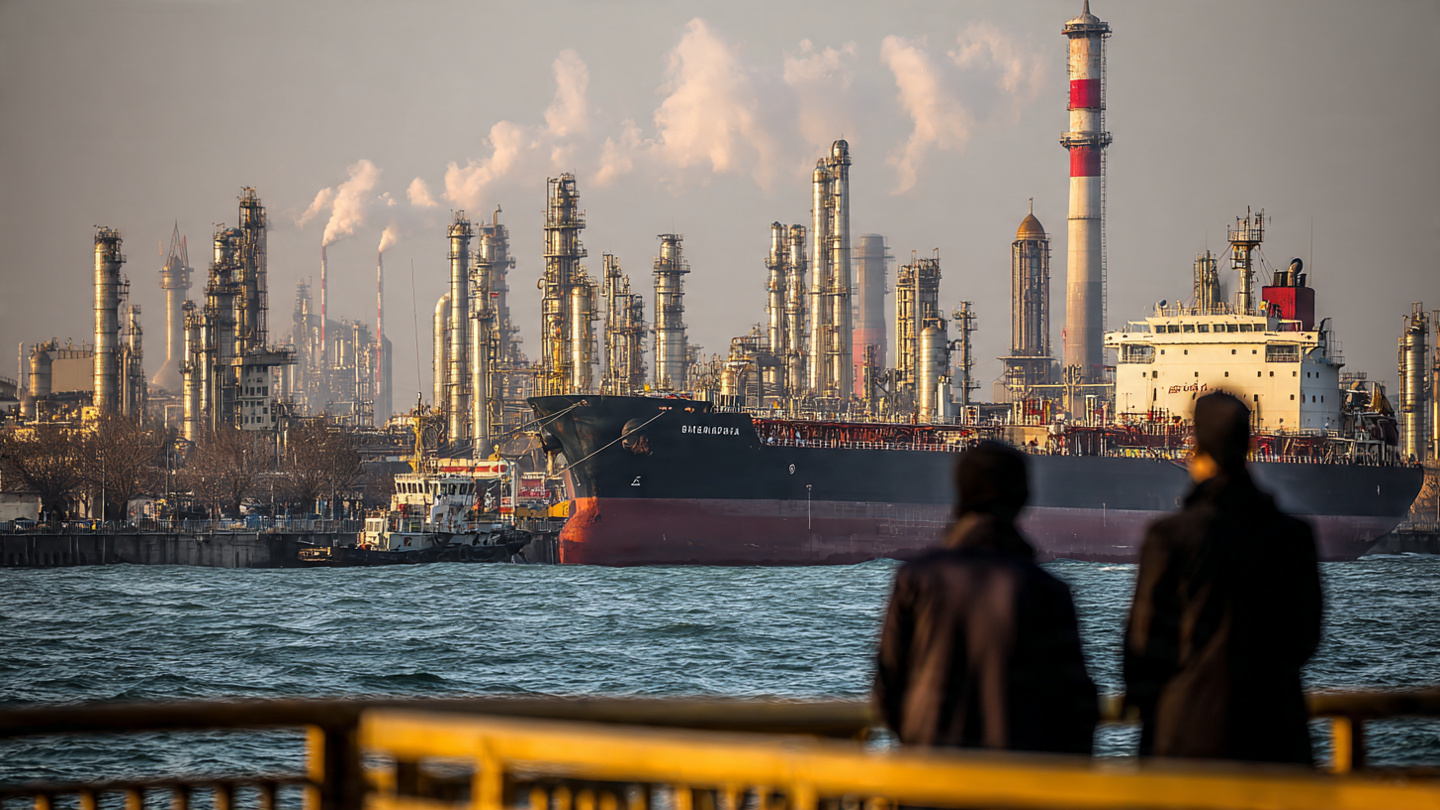
Oil markets are on edge as concerns about Iran’s export outlook have helped push crude prices to their highest levels in seven weeks. Traders are increasingly factoring in risks that supply from Iran might tighten, fueling a renewed geopolitical risk premium in global oil benchmarks. The developments come amid heightened domestic unrest inside Iran, potential U.S. military options, and broader geopolitical tensions that are reshaping expectations for energy supply and demand worldwide.
Oil Climbs Amid Iran Export Concerns
On January 12 and 13, 2026, global crude prices settled at a seven‑week high, with Brent crude and U.S. West Texas Intermediate (WTI) both advancing as traders reacted to potential disruptions in Iranian oil exports. Brent rose nearly 1% to about $63.87 per barrel, while WTI climbed to roughly $59.50 per barrel, marking significant gains for both benchmarks.
These increases reflect growing anxiety over Iran’s future export capacity, particularly as widespread protests and political instability inside the country raise doubts about continued production and shipments.
Why Iran’s Oil Exports Matter
Iran is a major oil producer and a key member of the Organization of the Petroleum Exporting Countries (OPEC). Despite longstanding U.S. sanctions, Tehran has managed to maintain and even, at times, grow its crude exports by leaning on inventive trading methods and robust demand from buyers like China. According to recent estimates, Iran’s exports reached levels near 2.3 million barrels per day, among the highest since sanctions were reimposed, with most of that crude finding its way to Asia through indirect or shadow channels.
The country’s ability to keep crude flowing despite sanctions has been a critical factor in oil markets. However, any hint that exports could slow — whether due to internal unrest, new sanctions, or logistical disruptions — immediately sharpens market focus on supply risk worldwide.
Domestic Unrest Adds to Uncertainty
Iran has seen a surge in anti‑government protests that have disrupted normal economic activities in several regions. Although oil infrastructure has not been directly targeted, the broader political instability has elevated fears that production or export operations could be impacted if unrest spreads or if authorities prioritize security over continuity.
Markets are particularly sensitive to these risks because of Iran’s strategic role in global energy flows and its proximity to the Strait of Hormuz, one of the world’s most vital oil chokepoints. Historically, even the threat of disruption at the strait — where nearly one‑fifth of global petroleum transits — has led to price spikes as traders price in potential supply shocks.
Geopolitical Layer: U.S. Pressure and Military Options
Adding further pressure to oil markets is the possibility of external intervention. The U.S. government has signaled a willingness to consider strong options if the situation in Iran escalates, prompting fears that military involvement could disrupt exports. While formal action has not been taken, the threat itself has contributed to market volatility and pushed crude prices higher as traders factor in a widened risk premium.
Another dimension of U.S. policy that is influencing sentiment is the threat of tariffs on countries trading with Iran. Announced by U.S. leadership, this creates a complex environment where buyers — including some in Asia — may hesitate in finalizing Iranian crude purchases, further tightening demand.
How Traders Are Interpreting the Signals
Oil markets are notoriously sensitive to geopolitical risk because so much of the world’s crude supply originates from politically volatile regions. When markets perceive that key producers might deliver less crude than expected — whether due to conflict, sanctions, or logistics — prices often rise as traders scramble to hedge against potential shortfalls.
In this case, the combination of internal instability inside Iran, U.S. policy threats, and broader regional tensions has created a situation where buyers are less certain that future barrels will flow smoothly, and sellers are cautious about locking in long‑term contracts at lower prices.
Role of Inventory Data and Broader Supply Risks
Although Iran is at the center of recent price gains, other supply considerations are also in play. Surprising drops in U.S. crude inventories earlier in 2025 highlighted tightening supplies and added to bullish sentiment across benchmarks.
At the same time, production and export issues in other countries — such as Azerbaijan, which saw a decline in oil exports in 2025 — contribute to a broader picture of constrained global supply that gives additional support to higher prices.
Limits on Further Price Gains
Despite the bullish tone, analysts warn that some factors could limit how far prices rise. For example, Russia and other producers outside OPEC continue to supply oil, and markets are watching developments in countries like Venezuela, where new crude exports could help offset disruptions elsewhere. Indeed, the possibility of Venezuela delivering millions of barrels of previously sanctioned oil to U.S. buyers has given some market participants reason to temper expectations of runaway price increases.
These offsetting influences help explain why, while oil prices have reached a seven‑week high, they have not yet returned to the dramatic peaks seen during periods of intense Middle East conflict in previous years.
What This Means for Consumers and Businesses
For consumers in oil‑importing countries, rising crude prices often translate into higher gasoline and diesel costs at the pump. Businesses that rely heavily on transportation and logistics — from airlines to freight operators — also feel the impact as fuel expenses rise, which can, in turn, affect prices for goods and services across the economy.
Energy analysts note that the current price environment reflects not just supply realities but also market psychology — where fear of disruption can drive prices even when physical supply hasn’t yet been cut significantly.
Conclusion: A Market Driven by Uncertainty
The surge in oil prices to a seven‑week high amid worries about Iranian exports underscores how critical geopolitical dynamics remain to global energy markets. With protests inside Iran, potential U.S. intervention looming, and broader regional tensions at play, traders are increasingly cautious about future oil flows. Although there are possible offsets from other supply sources, the current climate points to continued volatility and price sensitivity as markets navigate a complex geopolitical and economic landscape.